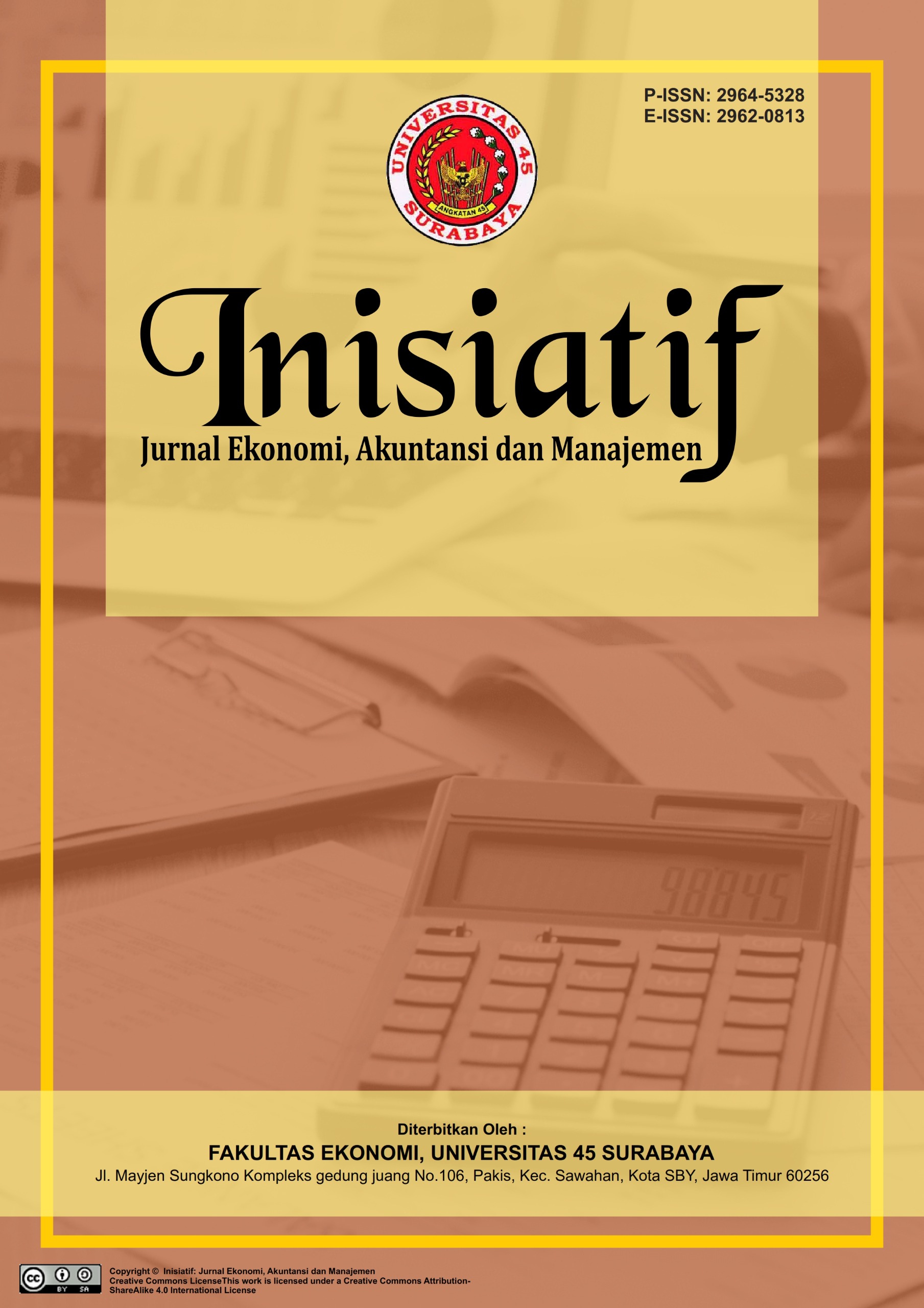
Implementation of Digital-Based Operational Management to Meet the Expectations of “Z Generation”
DOI:
https://doi.org/10.30640/inisiatif.v5i1.7329Keywords:
Business, Digital Technology, Generation Z, Operational Management, Qualitative ApproachAbstract
This study explores the implementation of digital-based operational management in meeting the expectations of Generation Z consumers in the business sector. Rapid technological advancements and changing consumer behavior have encouraged businesses to transform their operational processes to improve efficiency, service quality, and customer orientation. Generation Z expects fast services, easy access to information, personalized experiences, and technology-driven interactions. This study employed a qualitative case study approach. Data were collected through in-depth interviews, observations, and documentation involving business owners who have implemented digital operational systems. The data were analyzed using data reduction, data display, and conclusion drawing, while source triangulation ensured the credibility of the findings. The results show that digital-based operational management enhances business efficiency, improves service quality, and strengthens organizational responsiveness to Generation Z preferences. The use of digital technologies, such as inventory management systems, digital payment platforms, and social media, supports faster and more accurate operational decision-making. However, challenges remain, including limited employee digital competencies, high technology investment costs, and the need for continuous organizational adaptation. The study concludes that successful digital operational management requires technology adoption, organizational readiness, capable human resources, and continuous innovation.
References
Braun, V., & Clarke, V. (2022). Thematic analysis: A practical guide. SAGE Publications. https://doi.org/10.53841/bpsqmip.2022.1.33.46
Creswell, J. W., & Poth, C. N. (2022). Qualitative inquiry and research design: Choosing among five approaches (5th ed.). SAGE Publications.
Deloitte. (2023). Global Gen Z and millennial survey 2023. https://www.deloitte.com
Djafarova, E., & Bowes, T. (2021). Instagram made me buy it: Generation Z impulse purchases in the fashion industry. Journal of Retailing and Consumer Services, 59, 102345. https://doi.org/10.1016/j.jretconser.2020.102345
Flick, U. (2022). An introduction to qualitative research (7th ed.). SAGE Publications.
Heizer, J., Render, B., & Munson, C. (2022). Operations management: Sustainability and supply chain management (13th ed.). Pearson.
Ivanov, D. (2021). Supply chain viability and the COVID-19 pandemic: A conceptual and formal generalisation of four major adaptation strategies. International Journal of Production Research, 59(12), 3535–3552. https://doi.org/10.1080/00207543.2021.1890852
OECD. (2023). Digital transformation in SMEs and public policy. https://www.oecd.org
Prasetyo, R. (2026). Konstruksi loyalitas konsumen terhadap brand lokal melalui social commerce. Jurnal Media Akademik (JMA), 4(5). https://jurnal.mediaakademik.com/index.php/jma/article/view/5935/4292
PwC. (2024). Global digital operations survey 2024. https://www.pwc.com
Sari, D. W. (2021). Analysis of the effect of the liquidity ratio on financial performance in Multi Bintang Indonesia Tbk. International Journal of Global Accounting, Management, Education, and Entrepreneurship, 1(2), 78–89. https://doi.org/10.48024/ijgame2.v1i2.18
Siswohadi, S., & Rahma, S. A. (2026). Digitalisasi manajemen operasional sebagai upaya peningkatan daya saing UMKM Batik TIN. Jurnal Ekonomi Manajemen Akuntansi, 32(1), 79–89. https://ejournals.stiedharmaputra-smg.ac.id/index.php/EMA/article/view/397/257
Teece, D. J. (2020). Dynamic capabilities and entrepreneurial management in large organizations: Toward a theory of the (entrepreneurial) firm. European Economic Review, 86, 202–216. https://doi.org/10.1016/j.euroecorev.2015.11.006
UNCTAD. (2024). Digital economy report 2024. https://unctad.org
World Bank. (2022). Digital development overview: Bridging the digital divide. https://www.worldbank.org
Yin, R. K. (2024). Case study research and applications: Design and methods (7th ed.). SAGE Publications.
Downloads
Published
How to Cite
Issue
Section
License
Copyright (c) 2026 Alfiyatun Ilmiyah, Andhini Sovi Hidayanti, Kirania Ima Dwi Sindarti, Neza Maulida Bil Ghisah, Novia Fitri Jufriani

This work is licensed under a Creative Commons Attribution-ShareAlike 4.0 International License.