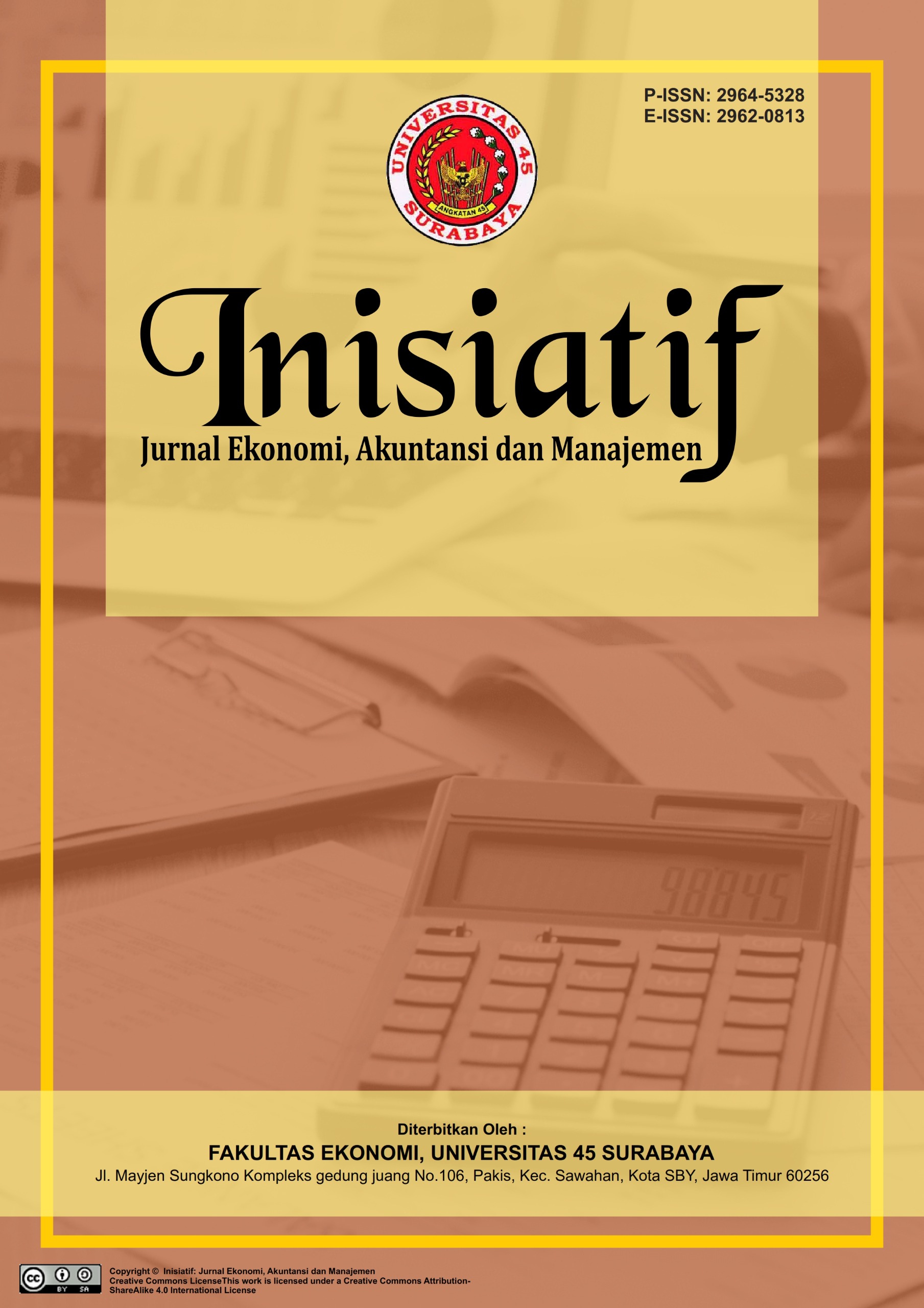
Analisis Penerapan SAK-EMKM pada Laporan Keuangan UMKM
Studi Kasus Kedai Sayur Ibu Diana
DOI:
https://doi.org/10.30640/inisiatif.v5i1.5629Keywords:
Accounting Implementation, Financial Statements, MSMEs, SAK-EMKM, Vegetable StallAbstract
MSMEs play an important role in the economy, even though most business actors still find it difficult to prepare financial statements in accordance with accounting standards. This is also the case with Ibu Diana's Vegetable Stall MSME, which still uses simple record keeping, thereby reducing the quality of the financial information produced. Based on this, this study aims to analyze the implementation of the Financial Accounting Standards for Micro, Small, and Medium Entities (SAK-EMKM) at Ibu Diana's Vegetable Shop and identify the benefits and obstacles encountered in implementing these standards. This study uses a qualitative method with a case study approach. Informants were determined purposively, namely the owner of Kedai Sayur Ibu Diana, then expanded through the snowball technique to obtain additional sources. Data were collected through triangulation techniques, which included in-depth interviews about how to record business activities and documents related to finance. The results of the study show that Kedai Sayur Ibu Diana has not fully implemented SAK-EMKM due to limited understanding, lack of transaction evidence, and the absence of an organized recording system. However, the implementation of standards has the potential to provide benefits in the form of increased recording accuracy, reliability of financial information, and ease of decision making. This study shows that accounting assistance and training are very important for MSME players so that they can effectively implement SAK-EMKM.
References
Akuntansi, J., & Universitas Sam Ratulangi. (2023). Judul artikel belum lengkap. Jurnal Akuntansi, 18(4), 250–259.
Aliyah, A. H. (2022). The role of small and medium micro enterprises to improve community welfare (in Indonesian). Welfare: Jurnal Ilmu Ekonomi, 3(1), 64–72. https://doi.org/10.37058/wlfr.v3i1.4719
Ayem, S., Program Studi Akuntansi, & Universitas Tamansiswa. (2020). Tax planning. ACT Companion to Treasury Management, 11(1), 159–161. https://doi.org/10.1016/B978-1-85573-327-5.50185-1
Bisnis, J. E., Jebmak, A., Delani, M., & Franita, R. (2025). Penerapan SAK EMKM. Jurnal Ekonomi Bisnis, 4(2).
Febriana, H., Rismanty, V. A., Bertuah, E., Anismadiyah, V., Sembiring, L. D., Dewi, N. S., Jamaludin, Jatmiko, N. S., Inrawan, A., Astuti, W., & Dewi, I. K. (2021). Dasar analisis laporan keuangan. Media Sains Indonesia.
Fitriana, A. (2024). Buku ajar analisis laporan keuangan. Akademi Keuangan & Perbankan Riau (AKBAR).
Manik, I. A. P. I. (2023). Penerapan standar akuntansi keuangan (PSAK) No. 2 tentang laporan arus kas pada CV Mandiri. Wawasan Jurnal Sistem Informasi, 2(2). https://doi.org/10.46576/wjs.v2i2.3465
Mutiara, I. (2025). Pentingnya laporan keuangan sebagai alat ukur kinerja manajemen perusahaan di Indonesia. JUMANJI (Jurnal Manajemen Jambi), 8(1).
Nuratama, K. A. S. (2021). Tata kelola keuangan dan manajemen UMKM.
Pemerintah Kota Tanjungpinang, Kabupaten Banyumas, & Provinsi Jawa Tengah. (2025). Judul terbitan tidak tersedia. 5(1).
Pudjowati, J., Mas’adah, Wahyuni, S., Pudjiastuti, N., & Inayah, N. L. (2023). Pengembangan usaha mikro kecil menengah (UMKM) kreatif asesoris “Cantik” untuk meningkatkan pertumbuhan usaha semasa pandemi pada event Jatim Fair. Community Development Journal, 4(2), 2520–2541. https://journal.universitaspahlawan.ac.id/index.php/cdj/article/view/14638
Sastri Ayu Lestari, & Mulyono, A. (2023). Analisis penerapan laporan keuangan berdasarkan SAK EMKM pada UMKM Robbani Snack. Jurnal Pengabdian Masyarakat dan Riset Pendidikan, 2(2), 114–123. https://doi.org/10.31004/jerkin.v2i2.213
Sudarmanto, E., Saraswa, A. M., Suryaningsih, M., Yaumi, S., Junaidi, A., Sugihyanto, T., Nuha, S. U., & Esha, D. (n.d.). Judul buku tidak tersedia.
Susilowati, H., Ratnaningrum, Andriana, M., Hargyatni, T., & Sholihah, E. (2022). Kinerja bisnis UMKM di era digital (Vol. 32, Issue 3). Eureka Media Aksara.
Widiastiawati, B., & Hambali, D. (2020). Penerapan penyusunan laporan keuangan berdasarkan SAK EMKM pada UMKM UD Sari Bunga. Analisis, 2(2), 38–48.
Downloads
Published
How to Cite
Issue
Section
License
Copyright (c) 2026 Inisiatif: Jurnal Ekonomi, Akuntansi dan Manajemen

This work is licensed under a Creative Commons Attribution-ShareAlike 4.0 International License.